Cart

Your cart is empty.


Oscar and Francisca Chacón inherited this family farm from their grandparents and is currently run by 6 brothers and sisters and their mother. This couple is one of the first coffee growing families in Costa Rica to produce Honey and Natural Process specialty coffee, following an earthquake in 2008, wide-spread electricity/water shortages lead them to take inspiration from African processes - building raised beds for drying, which led to new ways of processing their coffee. Through experimentation, these innovative processing led to the well-sought-after honey lots that Costa Rica is renowned for.

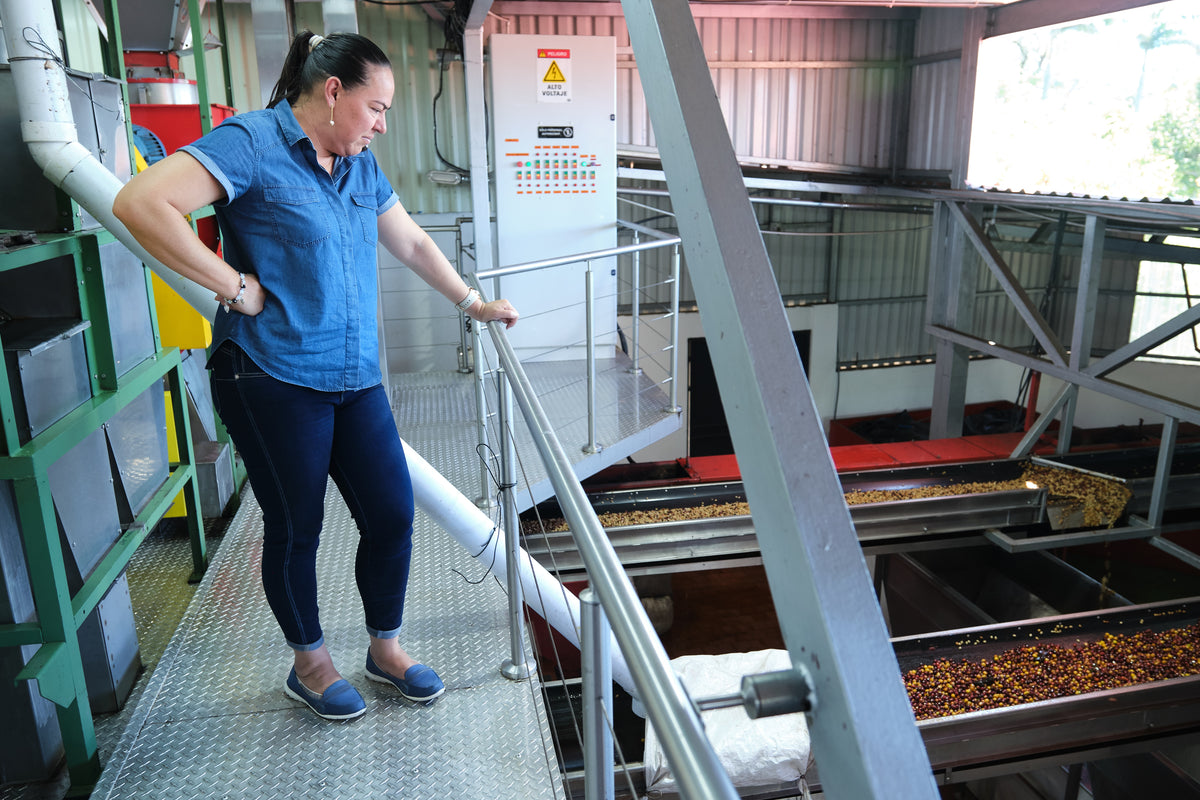
"We've built a system that allows us to produce a high-quality product using sustainable practices that are healthy for the farm, for the crop we're growing, for the people who work the land, and for the person who ends up drinking that coffee."

"In the production system we have, the first and most important thing is that whenever we establish or replace a coffee variety or plant a new lot, we choose varieties that are resistant to certain diseases. But these varieties aren't resistant just on their own - we also create an environment that allows them to grow in a healthy way. You have to build that environment. It's built by planting trees."